South Florida's year-round warmth and dense tree canopies make structural attics prime harborage sites for roof rats. In neighborhoods like Coconut Grove and Coral Way, mature live oaks, avocado limbs, and palm fronds…
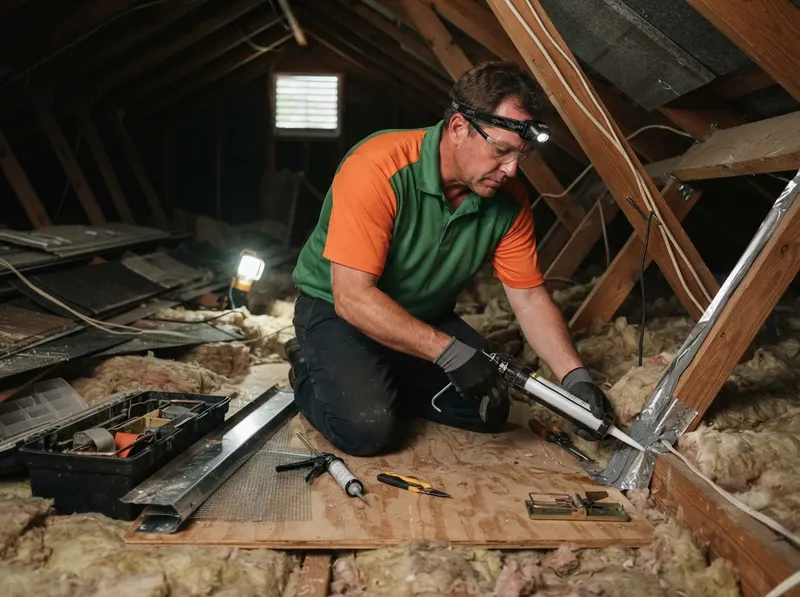
South Florida's year-round warmth and dense tree canopies make structural attics prime harborage sites for roof rats. In neighborhoods like Coconut Grove and Coral Way, mature live oaks, avocado limbs, and palm fronds frequently contact fascia boards, creating direct transit pathways to barrel tile roofs and unsealed soffit vents. Attic rodent exclusion and trapping isolates these pathways by combining mechanical trapping with permanent architectural sealing. This service addresses acute activity immediately without placing anticoagulant rodenticides in attic spaces, preventing decaying odors from penetrating living quarters during 90-degree summer heat cycles.
Technicians seal entry points using weather-resistant materials designed to withstand Miami-Dade County's intense humidity and high-velocity wind events. Quarter-inch 19-gauge galvanized hardware cloth, copper wire mesh, and elastomeric structural sealants are fitted over junction gaps, ridge vents, air conditioning chase lines, and plumbing stacks. In dense architectural corridors such as Brickell, Edgewater, and Little Havana, flat-roof flashings and utility penetrations provide secondary rodent paths that require tailored metal flashing. Chemical baseboard sprays do not resolve attic populations; structural closure ensures rodents outside cannot enter once the interior breeding population is cleared.
Decision-fit considerations center on structural integrity versus short-term mitigation. Property owners facing acute nighttime scratching sounds require paired trapping and exclusion: trapping removes the active population within 5 to 14 days, while exterior exclusion prevents re-infestation from neighborhood tree lines. If a home only undergoes trapping without exterior closure, neighboring roof rats repopulate the vacant attic within weeks. The trade-off for full structural exclusion is the upfront investment in physical contractor-grade repairs versus the ongoing expense of open-ended monthly bait programs. Service begins with an attic and roofline inspection, proceeds through mechanical trapping cycles with physical trap resets every 48 to 72 hours, and concludes with final perimeter sealing once zero interior activity is recorded.
Every job gets a firm, written price after a free on-site visit.
Tell us about your attic rodent exclusion and trapping job in Miami and we'll send a clear, written quote, usually the same day.
 Silver Palm Pest Control